Best laid schemes

My schemes, they gang aft agley.

I plan out these knitting designs of mine with care. I sketch. And I think. And I walk and think. And I mess around with yarn.

And then I actually knit these things I’ve schemed. And they end up looking completely different from what I had intended.

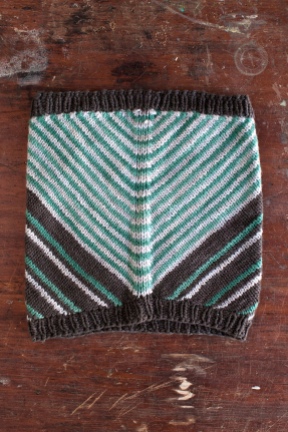
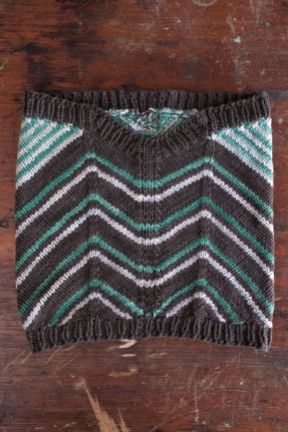
Case in point: my new Prosecco Hat. Here’s what it was supposed to look like. It was going to have a hem at the bottom, and was to have a two-color bubble motif whose color scheme reversed about halfway up the hat.

Neither one of those things worked out exactly. Problem #1: The internal part of the hem would have had to have been ridiculously long in order to play nicely with the color pattern, so it got jettisoned. Now I was stuck on what to do with the brim of the hat. Plain ribbing seemed dull. Corrugated ribbing is lovely but I feel like it’s almost become a cliche for a color-work hat.

I finally found a slip-stitch pattern (what you see on the finished hat above) that gave the brim of the hat some interest without detracting too much from the bubble pattern I’d worked so hard to chart out. Problem #1 solved.

On to problem #2: I was designing this hat for Malabrigo’s Quickies program. Believe me, that part in and of itself is not a problem. They have been great to work with.

The problem was the yarn. Well… no wait, not really the yarn, because the yarn is the luscious new Arroyo, Malabrigo’s sport-weight, superwash merino. It is scrum-diddly-umptious. No, the problem was that the two colors that I chose (VAA and Arco Iris) didn’t quite contrast with each other as much as I thought they would. Changing the two colors mid-way up the hat, so that the foreground color became the background color and vice versa, just made the hat look garbled and confused. Like a cake that you frosted before it cooled off completely.

So the dark green VAA colorway would now stay the background color all the way up the hat. Not quite as much bubblicious fun as I had originally intended, but still, plenty of colorful fizz to go around.

And then there was the photography. As I fall further down the rabbit hole of professional knitwear design, I’ve realized that I need to at least occasionally hire another pro to do my photography. I’m really only reasonably competent with a camera. I’ve got a LOT to learn.

Recently, I learned that a former student, Carlos Barron, had become a professional photographer, and I loved what I was seeing of his work. Mere days before I needed to get the Prosecco Hat pattern to Malabrigo, Carlos and I were finally able to schedule a photo shoot for this hat and a few other goodies.

And that’s when the entire middle column of the country got besieged with 100 tornados. So we had to postpone the shoot, but I still needed photos, and that meant heading for the trusty brick wall on the side of my house — the backdrop for so many of my knitting photos.

My husband took one of the above photos and my seven-year-old son took the other. See if you can guess who took which. (Hint: look at the angles.) They both did a pretty good job, but… well, none of us is Carlos.

In the end, I’m left with a hat that I really like and photos that I may need to replace. Not a bad outcome, all things considered. Just a little agley.

How to Teach Beginning Knitting

I love to teach and knitters are some of the most fun students I’ve ever had. No one falls asleep in a knitting class. People remember their homework. Usually. Knitters want to be there.

Having taught both history and knitting for more than a decade, I realized I had a lot I could share with other knitting teachers about how to teach a class. So about 18 months ago, I started periodically offering teaching modules — detailed guides on how to teach different knitting classes. Each includes a pattern that the teacher can use as a class project.

My latest offering is one I’ve been wanting to write for a while: How to Teach Beginning Knitting. I’m going to offer several versions of this module, actually — this version is for a three-session class, but I’d like to offer modules for shorter and longer courses, too.

The document includes the class project pattern (in this case, an ingenious hat that gets students started knitting back and forth, and then switches them to in-the-round knitting on circulars), and also eight pages of step-by-step instructions about how to prepare for the class and how to walk the students gradually from casting on, through the knit stitch, knitting in the round, the purl stitch, measuring gauge, and decreasing.

The guide also prompts you to think through your particular strengths as a teacher and provides suggestions on how to manage difficult classroom situations. (May you never have one — I rarely have.)

I hope this latest teaching module empowers even more of you to enter the wonderful world of teaching others to knit. It’s an extremely rewarding craft in and of itself.

Vindication

For months, I have been nervously anticipating the event I just went through. If you’ve been reading this blog for any length of time, you know that I just resigned from my job as a full professor in history, after 13 years on the job and nearly two decades committed to a life in academia.

But sometime this past fall, when I’d already decided it was time for a major life change, I got an offer I couldn’t refuse. I was invited to present a paper at a small workshop on animals and empire in the History and Philosophy of Science department at Cambridge University in the U.K. Why, you ask, couldn’t I refuse this invitation when I’d just decided this wasn’t my life anymore? For so many reasons: first, I quit my university job, but that didn’t necessarily mean abandoning my scholarship. Second, the department that invited me is most near and dear to my heart (and you’ll soon understand why). Third, I had a paper mostly written already that was perfect for the conference. And finally, they offered to pay for my flight, hotel, and meals.

Yeah. Of COURSE I was going.

But then again, it made me incredibly anxious. The British academy is very “laddish,” an English way of saying it’s very male-oriented. How on earth were they going to understand — let alone support — my decision to give up the academic dream which we’d all worked so hard to attain, in order to pursue a full-time career in knitting, which definitely makes the short list of girliest and thereby lowest-status fields of endeavor?

Most of my friends in Austin who are academics — even most of the women — advised me not to mention my career change at all when I came to this conference. Yeah, that’s how far the perceived gulf is between the two worlds. But I can’t be that person: I have to be everything-out-on-my-sleeve. So I was back to being nervous about how it would all go.

Well, the conference just ended, and I’m happy to report that it went very well. Not only was my paper well received, but so was my news. Thinking back on it, I can count two men who seemed utterly baffled (one — a good friend — even said, “you are KIDDING, right?”). But everyone else — men and women alike — was unabashedly supportive. In fact, it evoked several heartfelt discussions about career choice and quality of life.

And then came a moment that literally moved me to tears. After telling one of my mentors here at Cambridge (Jim Secord, a full professor here and a major intellectual figure) about my news, a few hours later I sat down to listen to him present the wrap-up, summative comments on the conference papers. Jim proceeded to frame the entirety of his remarks around the metaphor of — wait for it — KNITTING. He described at length how knitting was the perfect image for understanding the relationship between animals and empire in history, and even made an informed pun about how SSK not only stood for the sociology of scientific knowledge (the term familiar to most people in the room), but also slip, slip, knit, a technique for rearranging a set of individuals into an integrated whole.

When I told him afterward how wonderful that was, he said, “Oh, yes, well I did that just for you, because I want you to know that no matter where you are, we always appreciate you and hope you’ll keep writing in history for as long as it feels rewarding to you.”

I mean, seriously, do you get more dear than that? No. No, you don’t.

Yarn support: that’s the way to do it

ImageRarely have I encountered a business relationship that’s as kind and respectful as that between knitting designer and yarn company. When you design a sweater, yarn companies typically provide gratis the yarn that you need to knit the sample – which in and of itself is a pretty sweet deal. But on top of that, I have had universally good experiences dealing with yarn companies, from Malabrigo to Cascade to Berroco to KnitPicks. (Stacey, who runs KnitPicks’ Independent Designer Program, is a particular standout.) All have responded quickly and courteously and have even offered great ideas.

Even so, few can compare to Yarns of Italy, a relatively new yarn distributor that develops and purchases yarns in Italy and then sells them in the US for great prices. They have been selling on Etsy for a while, but more recently decided to go more big time. If you have been to TNNA in the last year or so, you have probably seen them.

In fact, to fill out their TNNA booth, the company held a design competition not long ago, asking designers to create something with each of their yarn lines. I was lucky enough to get to do the design for their Volute line, a gorgeous cotton-acrylic blend. (And let me tell you: gorgeous and cotton-acrylic blend are not phrases I typically put together.) The zippered cardigan above, called Velluto, is what I came up with.

All along the way, Kim (one of YOI’s owners, and the creative director) was a delight to work with. She has a whip-smart sense of humor and an easy manner, but is also very professional at all those times where that’s needed.

During the most recent TNNA, Kim even posted a photo of their friend, a handsome Sicilian gentleman, wearing my sweater. In all, I got the overwhelming message that these people love good design and want to do whatever they can to support it.

And then yesterday, I was looking at their just-launched web site, and saw that they had named one of the colorways in their Innamorata line after me! Innamorata is a luscious merino that comes in two weights and a gorgeous palette. Each color is named for a woman that the YOI owners like, and I got to be on the list! In fact, I’m light gray, since that’s the color of the sweater I designed for them. It is such a lovely and generous gesture. (My mother immediately ordered a sweater’s worth, of course. :) )

You’ll definitely see me designing more with their yarns….

Freebird

I am sitting here at my desk, completely wired on happy. Perhaps you would like to hear why? (Unless you are my secret archnemesis, in which case you probably want to hear no such thing. Secret archnemesis, why do you hate me so?)

See? I’m giddy. Giddy because I have just spent the first two weeks in my new life. My new life that I chose for myself. My new life that it took me six years to convince myself to commit to. My new life that seemed like a crazy pipe dream and now it’s real and it’s going really well.

After six years of graduate school and 13 years as a college professor, I have officially resigned from academia and have begun a full-time career as a knitting designer, teacher, and writer.

Loyal readers of this blog are thinking, weren’t you going to do this about six months ago? Yes, yes, I was, but then a colleague convinced me to job-share with her for a while, and you know what? As kind as it was for my institution to let me have some job security while I figured things out, neither teaching nor scholarship are jobs you can do well when your mind is more than half somewhere else.

So, I resigned a couple of weeks ago. Since I’ve been preparing for — and having near-anxiety attacks about — this moment for years now, imagine my delight to find that IT’S GOING REALLY WELL.

Fear #1: I won’t be able to make even a meager living as a knitter. What am I, 22 years old with this “I’m going to be an artist” crap?

This is a legitimate concern, and I have had my earful of knitwear designers telling me you can’t make a living at design. They’re no doubt right. So I’m not trying to make a living at that — at least, not exclusively.

I’m also teaching, and not just at my LYS, but also looking at nursing homes, play groups, knitting conventions, and fiber festivals. Teaching pays better, and I’ve always loved it.

And I’m doing some interior design work, making one-of-a-kind fiber pieces for an architecture firm.

And most recently two of my favorite people in craft, Shannon Okey and Heather Ordover, asked me to help out their creative ventures on a freelance basis.

And I might apply for a grant. And it’s… just all coming together. All coming together after six years of planning and fretting and planning and back-filling with contingency plans and sweating creative sweat out of sheer panic.

But still.

Fear #2: After nearly two decades in academia, how can I be intellectually challenged enough by knitting?

This is more my friends’ fear than mine, but it’s worth talking through. I’ll be the first to admit that working with one’s hands requires a different kind of mental challenge than teaching about, say, postmodern historiography.

But just because those mental challenges are qualitatively different does not mean that they are quantitatively different. Let me tell you, my head was completely exhausted after trying to figure out how to construct this damned macramé light fixture last week.

This is engineering I’m doing. And algebra. And art. It is stimulating and variable and alive, and I cannot imagine tiring of it.

Fear #3: I will become a crazy person working at home.

Now, this one the jury’s still out on. It’s been only two weeks and already the cat is being subjected to this kind of monologue during the day:

“OK, I came in the kitchen for… what? Oh, that’s right, the dye pot. I have left the motherf&*^in’ heat on under the dye pot again. Criminately, I’m going to burn the house down if I’m not careful…. Ooh, cheese sticks!”

And so on. Yeah, clearly I’m going to need to schedule some OUTINGS. I promise I will wash my hair beforehand.

Been caught stealin’, once when I was 5 **

We here at Dark Matter Knits design studios like to encourage delinquency in our youngest members of society, and so I have created the Better Pocket Scarf, just right for tucking sticky, sticky candy into.

This is all part of my campaign to come up with better knits for boys. The idea is simple: if we start from what they want — instead of what we want them to want — and figure out how to knit that, maybe they’ll actually use what we knit for them.

And what my son wants is POCKETS. Big, deep pockets on every piece of clothing. Pockets into which he can cram all manner of things and then promptly forget about them so that in the washing machine several days later they turn the family laundry into an ink-stained, gum-fused monstrosity. Pockets that can withstand 80 interesting rocks from a hike, an uncapped pen, a half-chewed piece of fruit leather, a gnawing reptile of some sort, and a small explosive device.

If this is the tall order, knitted fabric does not seem to be the ideal metier, but we are knitters, by gum, and we can make ANYTHING WITH YARN. With, in this case, a little bit of plastic thrown in for good measure. So this scarf’s pockets each have hidden inside a plastic CD sleeve so that no matter what gets tucked into those pockets, the yarn blissfully goes on thinking it is being worn by a middle-aged shut-in with manicured nails.

Oh, and also, the scarf has cool shaping (the pockets are knit like hats so that you can knit all the lovely color work in the round) and a fun color scheme courtesy of the affordable Berroco Vintage.

the obligatory Twilight reference

The scarf appears in the just-released Winter 2012 issue of Petite Purls, which is a beautifully produced online magazine of free knitting, crochet, and sewing patterns for children. This issue focuses on accessories, and — I’m warning you — you just might collapse from how sweet they are. I’m especially partial to Alison Stewart-Guinee’s mittens made to look like the Fantastic Mr. Fox. And I want to bottle her kid’s geeky cuteness.

All right, now, get back to work! I’ve got to go get my teeth cleaned, which is so much more fun than anything else I could be doing right now.

** Bonus points to you if you know the song from the title. (It’s one of my favorites — one of the best song bridges ever — though the video creeps me out.)

Hilarious – and affordable – knitting art

Today at the Armadillo Christmas Bazaar (one of Austin’s many holiday handcraft markets) I picked up another print by one of my favorite photographers, Lorri Honeycutt. She photographs tiny figurines with regular-sized objects, such as an inch-high sumo wrestler stomping on a grape. Hilarious!

And today I realized she has a photo of tiny figurines making a hat on a regular-sized knitting loom. How could I resist? Should you?